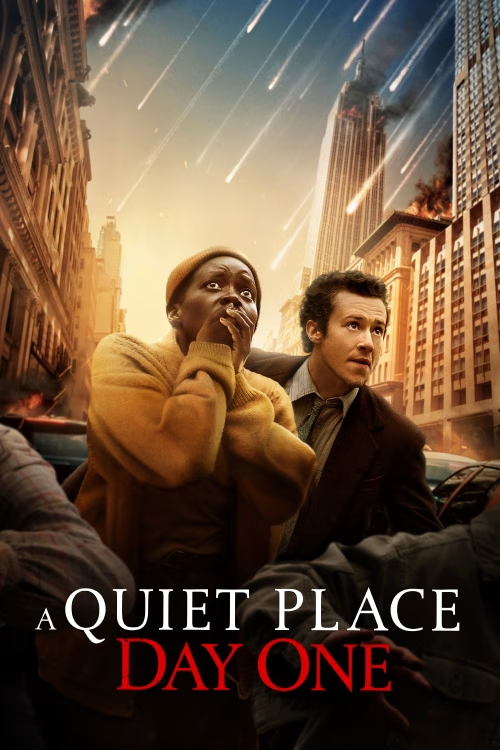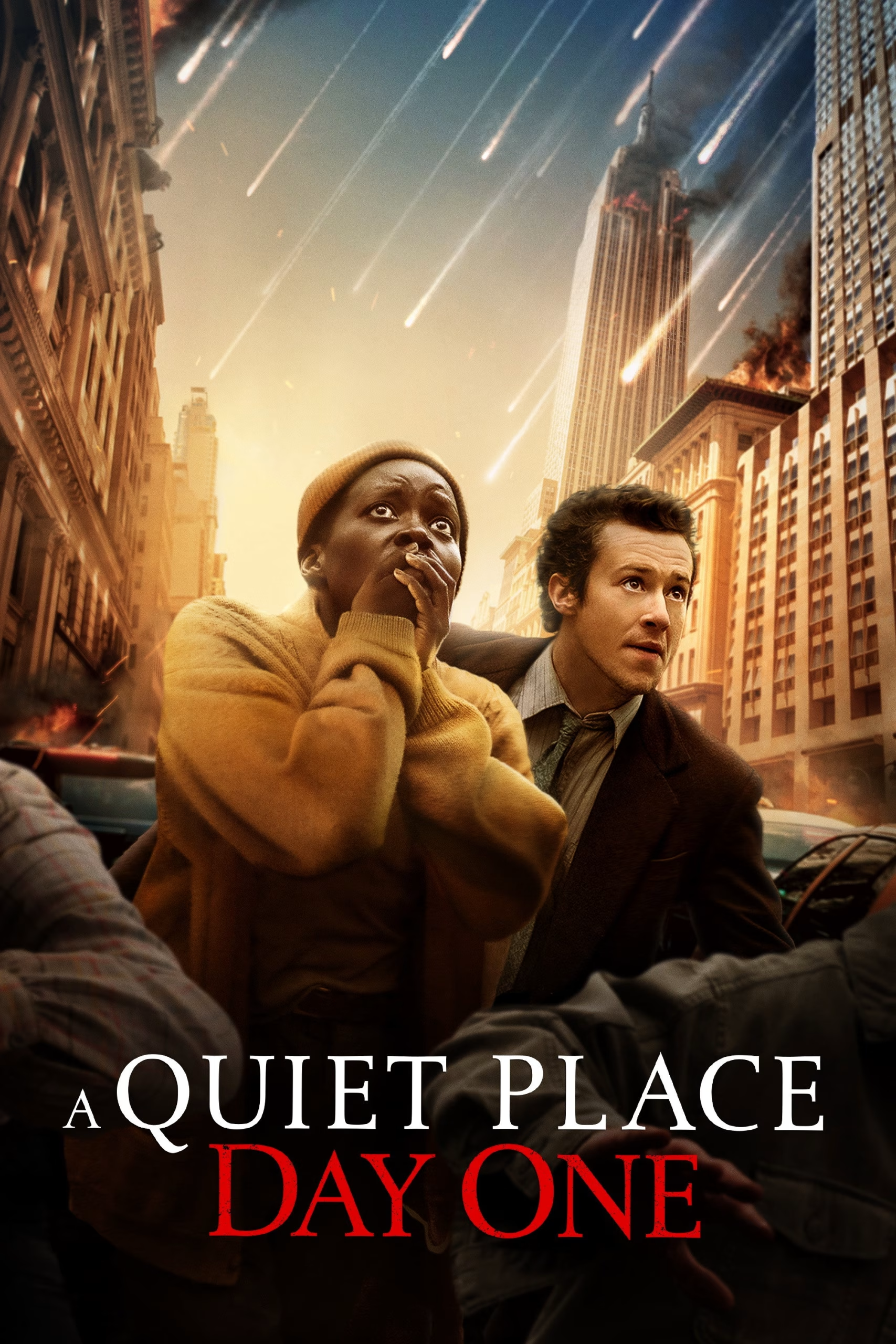
A Quiet Place: Day One takes place during an alien invasion of New York City in which creatures hunt by sound. The premise transforms one of a modern city’s defining qualities into a threat. Traffic, crowds and ordinary conversation no longer function as background activity. Every familiar source of noise may affect a person’s safety. The horror becomes meaningful because the characters are not starting in an isolated wilderness. They are surrounded by infrastructure and other people whose actions they cannot control. The film can use that contrast to make the collapse of ordinary routines immediately understandable.
Sound provides information beyond the image
A film about creatures that respond to sound encourages the audience to listen more actively. A distant crash may reveal a threat, while a small mechanical noise can interrupt a moment of apparent safety. The soundtrack needs to establish where important noises come from and whether characters are aware of them. A viewer might hear danger before a person on screen recognizes it, creating suspense through unequal knowledge. This approach turns sound design into the narrative equivalent of a map. The audience follows movement and risk through acoustic cues rather than relying on constant visual exposure of the creature.
Silence is a deliberate action, not simply an absence
When making noise can attract danger, ordinary forms of communication become difficult. A character may have to rely on gestures, eye contact or physical movement to convey urgency. That change creates practical obstacles during cooperation and conflict. Remaining quiet can also be emotionally costly when someone is frightened, injured or desperate to seek help. The narrative works when silence has consequences that the audience understands. A character’s struggle to suppress a natural response can be more frightening than a sudden loud effect, because viewers recognize the effort required and the uncertainty about whether it will be enough.
Urban geography creates different kinds of exposure
New York contains streets, buildings, stairwells, underground areas and crowded public spaces. Each location changes how sound travels and how quickly people can move. A narrow corridor may protect against some threats while leaving little room to escape another. A broad street can offer visibility without shelter. These variations allow filmmakers to develop suspense through geography rather than repeating the same encounter. Watch how characters choose a route and what information they have about the space ahead. If the audience understands the options, a sudden obstruction becomes dramatic because it changes a plan rather than merely supplying a surprise.
Survival is harder when other people share the danger
In a crowded environment, no single individual can control every sound. Someone else may panic, make a mistake or be unaware of the threat. That creates a moral dilemma: protecting oneself may require withdrawing from others, while helping somebody could endanger both people. Horror gains human significance when characters have understandable reasons to cooperate despite that risk. The story should not suggest that every frightened reaction is foolish. Panic is a recognizable response to an extraordinary event, and the tension comes from how people attempt to support one another while their ordinary methods of communication have become unreliable.
A companion animal changes the emotional stakes
The presence of Sam’s cat introduces another relationship with needs and behaviour that a human cannot completely direct. A companion animal can provide comfort during danger while also requiring protection. This complicates decisions because survival is no longer only about the person’s own movement and choices. A moment of apparent safety may carry an additional concern about where the animal is or how it will respond to unfamiliar circumstances. The relationship can make the film emotionally immediate without needing extensive dialogue. Small gestures of care may reveal more about the protagonist’s values than any large declaration of courage.
The beginning of an invasion creates uncertainty
A story set on the first day of a crisis is distinct from one in which people have already developed effective survival rules. Characters are learning what the creatures respond to and which assumptions about safety remain useful. Wrong conclusions can be understandable because the evidence is incomplete. A viewer who knows the franchise’s premise may possess information that the people in the story lack. That difference creates dramatic irony without requiring characters to act irresponsibly. The most compelling moments show the process of discovering a practical rule and recognizing what its limitations might be.
Watching with attention to space and sound
Choose a scene in which the immediate threat is not visible and identify what the soundtrack tells you about the environment. Notice whether characters share the same information and how they communicate when speaking becomes risky. Watch how the city changes from a familiar public space into a collection of difficult routes and temporary shelters. For basic details, see A Quiet Place: Day One in the catalogue, or browse Peleza Stream Movies for more suspense and horror. Check authorized services for viewing rights.
Why the human story matters within the spectacle
Alien creatures can supply immediate excitement, but their presence alone does not explain what a particular character is struggling to preserve. An invasion story becomes more affecting when the audience understands a person’s priorities before those priorities are endangered. Sam’s decisions can reveal what she values through practical acts of movement, care and trust. The setting’s acoustic restrictions may prevent lengthy emotional speeches, so the film must communicate character through smaller actions. That constraint is also a creative opportunity: viewers learn who someone is from what they choose to protect when explaining themselves could be dangerous.
Final perspective
A Quiet Place: Day One makes a familiar city frightening by changing the rules of sound. Streets and buildings acquire new significance when every noise can affect survival. Yet the most meaningful tension comes from how people respond to others when communication and cooperation become difficult. The story’s technical premise supports a recognizable human question: what are we prepared to protect under pressure?