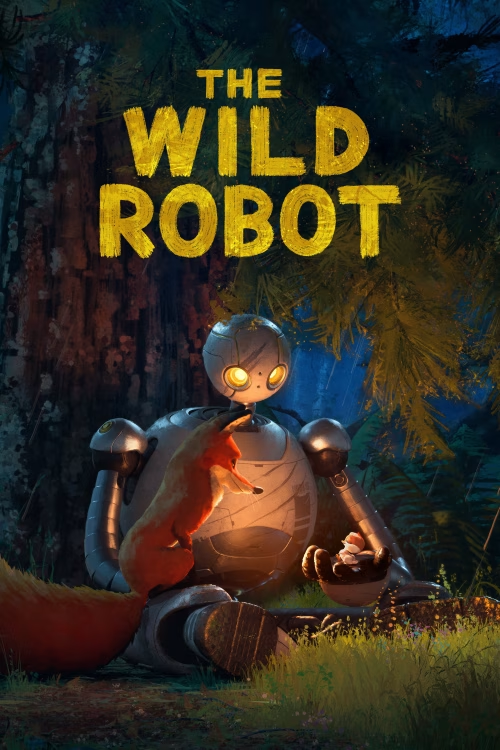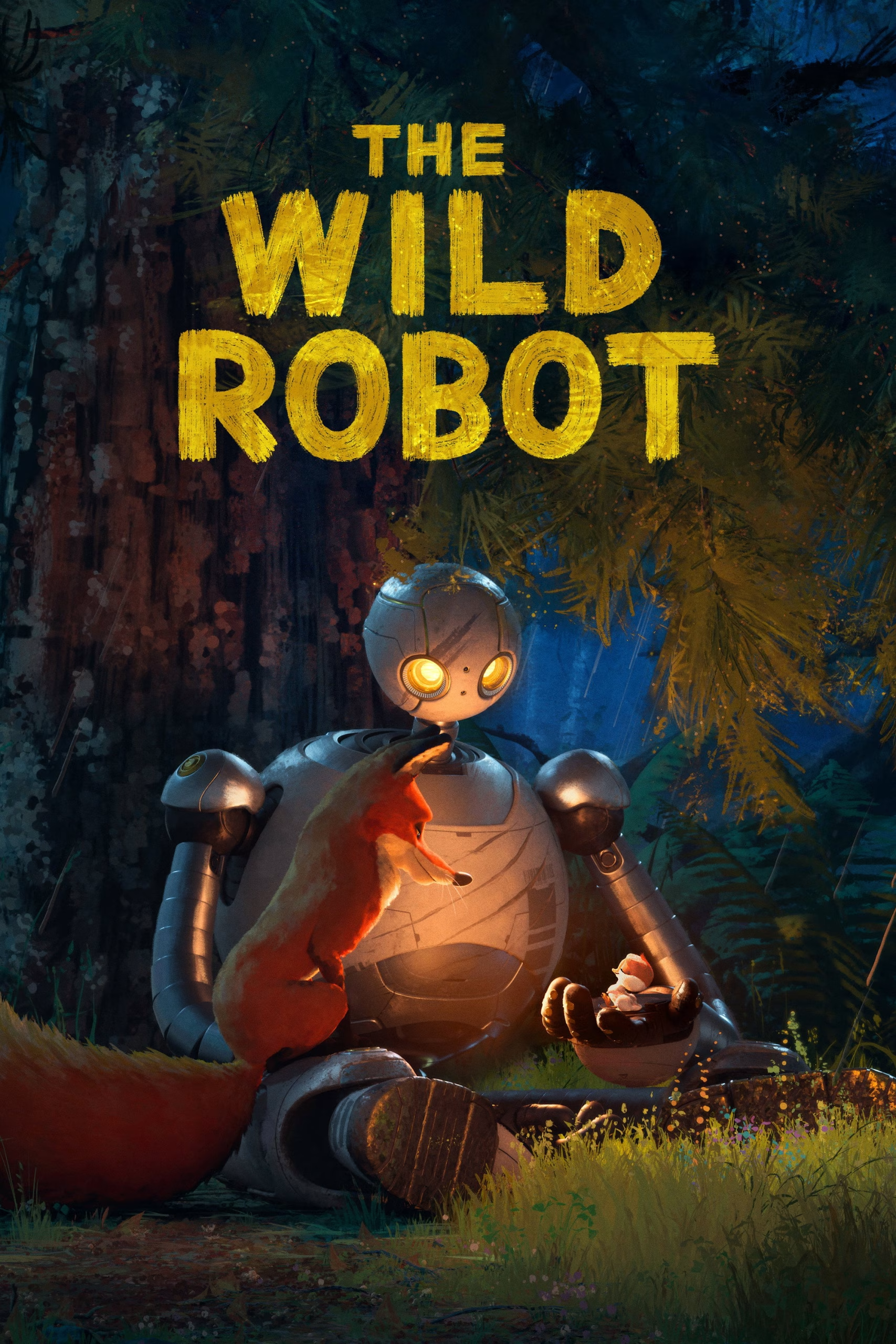
The Wild Robot begins with a machine in a place that does not appear to need machines. Roz is stranded on a remote island and initially approaches the environment as a problem to be understood through programming and observation. The story becomes emotionally powerful when that practical mindset changes. Roz does not simply learn how the island works; she begins forming relationships that challenge what she believes her purpose is.
This spoiler-light guide focuses on belonging, parenthood, adaptation and the relationship between technology and nature. For the stored synopsis, artwork and catalogue information, visit The Wild Robot movie page on Peleza Stream. You can also browse the broader Movies library for more animation and family titles.
Roz starts as an outsider because she reads the island like a task
At first, Roz looks for instructions. That makes sense for a machine designed to complete assignments, but the island does not provide a clear customer or objective. Animals respond to her as a strange intruder, while she keeps trying to interpret behaviour as information.
The comedy and emotion both grow from that mismatch. Roz is capable of learning, but learning facts is not the same as understanding relationships. The story gradually moves her from observation toward participation.
Parenthood gives Roz a purpose that cannot be reduced to programming
When Roz becomes responsible for a young gosling, the problem changes. Raising another living creature requires more than performing a checklist. Food, safety and practical skills matter, but so do patience, reassurance and the willingness to change when a plan does not work.
That is why the relationship becomes central to the film. Roz begins with the idea that success means completing a task. Parenthood introduces a different measure of success: helping someone else become capable of living independently.
Brightbill’s growth is also a story about difference
Brightbill does not have a conventional upbringing. His family situation makes him visibly different from the other geese, and that difference affects how he understands himself. The film uses that discomfort without turning it into a simple lesson that everyone must immediately accept him.
Instead, confidence develops through experience. Learning to fly, migrate and take responsibility gives Brightbill an identity built from what he can do rather than only from how others describe his family.
Fink helps connect survival with friendship
Fink initially fits the island’s survival logic more comfortably than Roz does. He understands hunger, danger and opportunity. His presence gives the story a character who can interpret the island for Roz while also benefiting from the unusual stability she brings.
Their relationship matters because friendship is not one-directional. Roz may have unusual strength and problem-solving ability, but Fink has social knowledge and instincts she lacks. Each becomes more capable through the other.
The island changes when its inhabitants start cooperating
Nature in the film is not presented as automatically peaceful. Animals compete, fear predators and protect themselves. That makes later cooperation meaningful because it is not treated as the island’s default condition.
Roz’s presence creates situations where characters who normally avoid one another have reasons to work together. The film therefore turns community into something constructed through repeated choices rather than something that simply exists.
Technology and nature are not treated as simple opposites
The movie could have argued that machines are bad and nature is good, but the story is more interesting than that. Roz’s mechanical abilities can protect, build and solve problems. The question is what those abilities are used for and whether she is allowed to choose their purpose.
That gives the film a strong identity theme. A designed function may explain where someone started, but it does not necessarily define every relationship or decision that follows.
Why the animation supports the themes
The visual style gives the island warmth and texture while allowing Roz to remain distinctly mechanical. That contrast helps the audience see her as part of the environment and separate from it at the same time.
As relationships grow, the emotional distance between those visual worlds becomes smaller. Roz does not need to stop being a robot in order to belong; belonging comes from participation, care and memory.
What to watch for without spoilers
Pay attention to how Roz’s language changes. Early interactions are often framed like requests, tasks and instructions. Later choices are increasingly based on attachment and judgement rather than a simple command.
Also watch the way the island’s animals respond to vulnerability. Characters who appear self-interested can change when they recognise another creature depends on them.
Who is The Wild Robot likely to work for?
The film is a strong fit for families, animation fans and viewers who enjoy stories about found family and belonging. Its ideas are accessible to younger audiences while still giving adults material about parenthood, identity and letting go.
Go in knowing that Roz is stranded on an island and becomes responsible for a young goose. The emotional strength comes from watching a machine designed for tasks discover that relationships cannot be completed like assignments.
Roz becomes compelling because competence is not enough
Roz arrives on the island as a machine designed to complete tasks, but the environment gives her problems that cannot be solved by following a simple instruction set. Caring for Brightbill forces her to interpret behaviour, make judgement calls and respond to needs that are emotional as well as practical. That shift is what gives the story its heart. Roz does not become interesting because she suddenly stops being a robot; she becomes interesting because she learns that responsibility often means adapting when the original plan no longer fits the situation.
Brightbill’s growth also gives the film a clear measure of Roz’s progress. Preparing a young goose to survive, socialise and eventually migrate requires patience rather than efficiency. The island community gradually becomes part of that process, which turns the story from a survival tale into one about belonging. Fink’s role is especially useful because his opportunism creates friction while also showing that relationships on the island are rarely as simple as predator, prey or outsider.
The seasonal structure gives the story natural momentum
The island’s changing seasons make time visible without needing constant exposition. Weather, migration and the changing needs of the animals keep forcing Roz to respond to new circumstances. That structure helps the movie balance adventure with quieter character moments and reinforces its central idea: survival is not a fixed problem solved once, but an ongoing process of learning how to live with others.