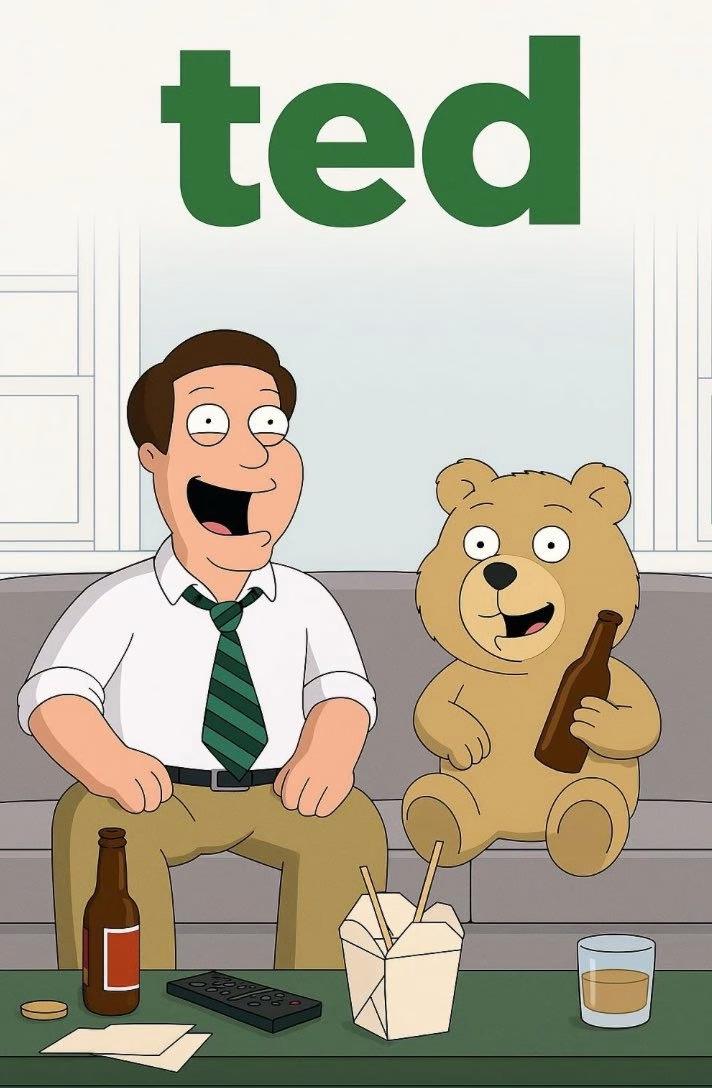
The animated format allows a familiar adult-comedy property such as Ted to explore jokes through visual possibilities that would require more elaborate production in live action. An exaggerated reaction, sudden physical transformation or deliberately impossible situation can be established without disrupting the visual medium’s internal rules. Yet technical freedom does not guarantee stronger humour. The audience still needs to understand what the characters want and why an unexpected event is funny to them. A series becomes memorable when its imaginative visuals reveal personality rather than merely providing an endless stream of impossible gags.
A recognizable character needs consistent motives
An outrageous comic figure can behave unpredictably while remaining recognizable. The difference lies in emotional logic. A joke may send a character into an absurd situation, but their reaction should reflect established desires or weaknesses. Ted’s broader comic identity is associated with irreverence and an unusual mismatch between appearance and behaviour. Animation can emphasize that contrast, yet a new series still needs to show how it affects relationships. If every action exists only to produce the next punchline, the central character risks becoming interchangeable with any other animated troublemaker. Consistent motives give even exaggerated comedy continuity.
Visual timing can replace an explanation
A long setup is not always necessary when an image communicates the joke immediately. A character’s expression, the scale of an object or a sudden change in movement may reveal the contradiction without dialogue. Animation gives filmmakers precise control over that timing. A pause can make a reaction funny, while a rapid sequence can build escalation through repeated variations. These techniques work best when the audience can easily recognize the point of comparison. If a scene becomes visually chaotic before its basic situation is clear, speed may undermine the humour. Good comic staging uses clarity to make exaggeration more effective.
Adult humour benefits from emotional contrast
A comedy intended for mature audiences may use provocative language or uncomfortable situations, but shock alone becomes predictable if every scene relies on the same escalation. An unexpected moment of sincerity can change the audience’s relationship with a mischievous character. A person who usually avoids responsibility may reveal care through an inconvenient choice. The contrast gives later jokes more meaning because the audience understands that relationships have consequences. Animation does not prevent emotional nuance. It can make an ordinary gesture feel especially deliberate after a sequence of impossible visual events.
The supporting cast should shape the joke
A comic lead becomes more interesting when surrounded by characters who do not all react in the same way. One may encourage the absurdity, another may resist it and a third may be attempting to manage the practical consequences. Those different responses create an ensemble rather than an audience for the central performer. The relationships should evolve through repeated situations. A successful supporting character brings independent priorities that the lead cannot simply control. Comedy then grows from colliding goals rather than relying entirely on the most recognizable figure to say something outrageous in every scene.
Short episodes need room for a complete story
Animation may allow very quick changes of setting, but an episode still benefits from a recognizable structure. A situation is introduced, a character makes a choice and the consequences complicate what seemed straightforward. Several jokes can develop from that same problem, making the episode feel coherent. If scenes are connected only by the shared presence of a familiar character, the result may become tiring despite individual funny moments. A recurring premise can create anticipation when the audience understands how the characters’ decisions tend to make matters worse. The satisfaction comes from the relationship between setup and payoff.
A familiar brand cannot replace creative purpose
A known comic property arrives with expectations about tone and character. Those expectations can help viewers understand the world quickly, but an animated series needs its own reason to exist. It might focus on possibilities that the new format makes especially effective or reveal aspects of relationships that a feature film lacked time to explore. Simply repeating recognizable jokes would make the series feel like a collection of references. A stronger approach uses familiarity as a starting point and then builds stories with specific conflicts and consequences. The audience should be able to appreciate an episode even without replaying earlier material.
How to judge the format on its own terms
When watching an animated Ted episode, notice which jokes rely on timing or visual exaggeration rather than dialogue alone. Ask whether an absurd situation changes the characters’ relationships or disappears without a trace. Consider whether the supporting cast has motives beyond responding to the lead. The Ted: The Animated Series catalogue page offers the show’s listing, with further entertainment available through Peleza Stream Series. The details of specific episodes and release arrangements should be checked through official sources.
The distinction between irreverence and repetition
Adult comedy often asks audiences to enjoy characters who behave in ways they would not accept from someone in everyday life. That distance can create useful satire, especially when the story reveals the consequences of selfishness or immaturity. It becomes less effective when provocation serves only as proof that the programme is aimed at adults. Animated storytelling has enough flexibility to build unusual situations around recognizable emotions such as insecurity, loyalty and envy. If a joke draws on those feelings, it can remain funny beyond the initial surprise. The objective is not merely to make the visual world more extreme, but to use that freedom for sharper character-based humour.
Final perspective
Ted: The Animated Series has the opportunity to use an expansive visual medium for character-driven adult comedy. Its success would depend less on how outrageous an image can become and more on whether the exaggeration makes a recognizable relationship funnier. Animation offers freedom, but clear motives and satisfying consequences remain the foundation of durable comic storytelling.