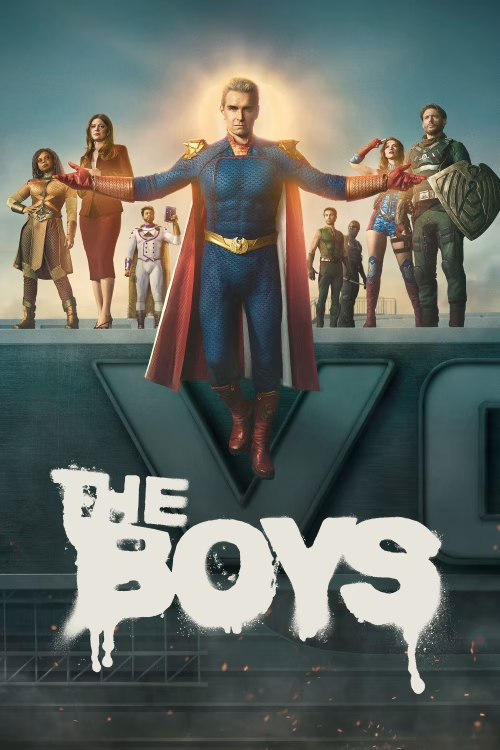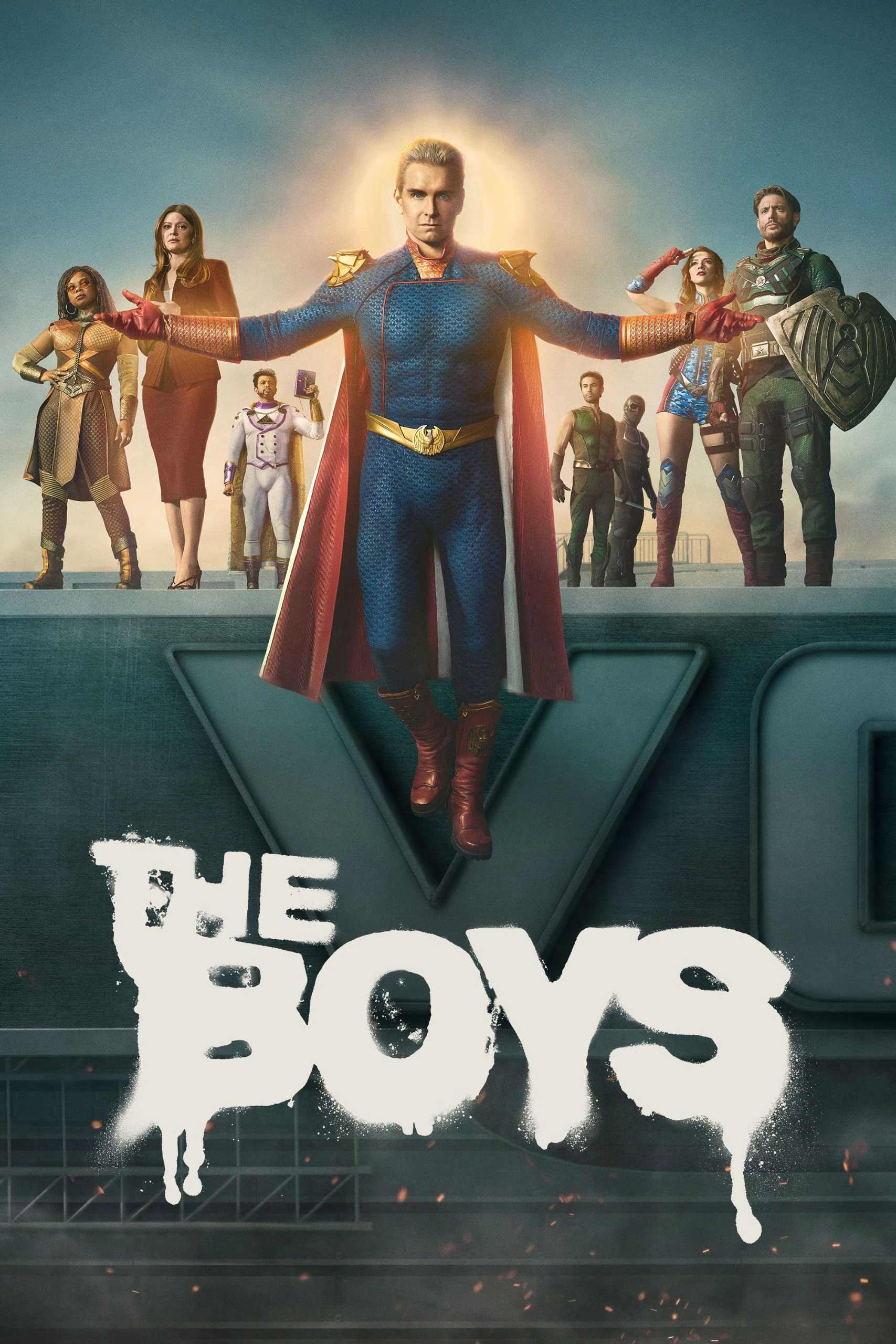
The Boys takes the familiar superhero idea and turns it into a story about power, celebrity, corporations and what happens when people with extraordinary abilities are protected from ordinary consequences. Instead of presenting superheroes as automatically noble, the series asks what a company would do if it could package super-powered people as brands, political symbols and entertainment products. That idea is the foundation of Vought International, the corporation at the centre of the story, and it is what makes The Boys feel very different from a conventional superhero series.
This guide is designed as a spoiler-light starting point. If you have not watched the series yet, you can read the main sections below without having the biggest twists revealed. For the deeper story, visit the The Boys series page on Peleza Stream, then follow our season and episode guides as they are published.
What is The Boys about?
At the beginning of the series, Hughie Campbell is an ordinary young man whose life changes violently after an encounter with A-Train, one of the most famous members of The Seven. That event pulls Hughie into the orbit of Billy Butcher, a hardened operator who believes superheroes should be investigated rather than worshipped. Butcher introduces Hughie to a hidden world of cover-ups, corporate pressure and carefully managed public images, and the two eventually become part of the group known as The Boys.
On the other side of the story is Annie January, better known as Starlight. She joins The Seven believing she has reached the highest level of superhero achievement. Her experience inside Vought gives the audience another perspective: while Hughie and Butcher look at superheroes from the outside, Starlight sees how the system works from within. The tension between those two viewpoints becomes one of the strongest parts of the series.
Vought International and The Seven
Vought is more than a company that employs superheroes. It manages reputations, merchandise, movies, political relationships, crisis responses and the public identities of its heroes. The Seven are presented as the corporation’s elite team, but the image sold to the public is often very different from what is happening behind closed doors. The gap between image and reality drives much of the drama.
Homelander sits at the centre of that system. He looks like the ultimate patriotic superhero, but the series steadily shows how dangerous near-unlimited power becomes when it is combined with insecurity, entitlement and a need for approval. Around him are characters such as Queen Maeve, A-Train, The Deep, Black Noir and Starlight, each responding differently to the pressures and compromises of Vought’s world.
Who are The Boys?
The Boys are not superheroes in the traditional sense. Their strength comes from information, planning, persistence and a willingness to challenge people who appear untouchable. Billy Butcher is the driving force, but the group becomes more interesting as Hughie, Mother’s Milk, Frenchie and Kimiko bring different motives and moral limits into the team. They do not always agree on what victory should look like, which means the conflict is not simply “humans versus Supes.” It is also about how far people are willing to go when they believe the system is corrupt.
Billy Butcher
Butcher is charismatic, ruthless and deeply personal in the way he approaches the fight against Supes. His anger gives the team momentum, but it also creates danger because revenge can become more important to him than the people around him. The series repeatedly tests whether his methods are actually different from the abuses he claims to oppose.
Hughie Campbell
Hughie gives the story its human entry point. He begins as someone who has almost no power in the world he is entering, which makes his choices important. His relationship with Starlight also forces him to confront the fact that individual Supes cannot all be reduced to the same category.
Starlight
Starlight’s story is about idealism meeting an institution that is much more cynical than she expected. She becomes one of the clearest examples of the series asking whether a person can stay principled while operating inside a powerful organisation that rewards silence and obedience.
Why the series stands out
The violence and dark humour are the most obvious features of The Boys, but the series has lasted because there is more underneath the shock value. It is interested in media manipulation, brand management, political messaging, fandom, fear, corporate accountability and the way institutions protect valuable people. Superpowers make those themes more extreme, but the questions remain recognisable.
Another important part of the show is that power changes relationships. Characters who begin as allies can end up using one another. People who appear weak can gain leverage through information. Characters who have enormous physical strength can still be emotionally vulnerable. That combination gives the series room to move between action, satire, horror, comedy and character drama without becoming only one of those things.
How many seasons does The Boys have?
As of 2026, The Boys spans five seasons. Prime Video lists Season 5 as the fifth and final season, bringing the central conflict involving Homelander, Butcher, Hughie, Annie and the wider team to its end. The final season contains eight episodes. You can confirm the current official listing on Prime Video.
Our next article will break those seasons down individually without forcing every storyline into one page. That gives readers a clean route from the general series overview into Season 1, Season 2, Season 3, Season 4 and Season 5, and then into episode-by-episode explanations where useful.
What to read next
Start with the The Boys series page if you want the catalogue view. Then continue with our upcoming The Boys Seasons Guide, followed by a full Season 1 Explained article and individual episode recaps. Each recap is linked back to the matching Peleza episode so you can move between watching and reading without searching for the correct page.
This structure will also keep spoilers under control. The series overview explains the world and characters, season guides discuss the larger arc, and episode posts handle the detailed events and endings. That means you can choose how deep you want to go instead of having every major twist revealed on the first page.