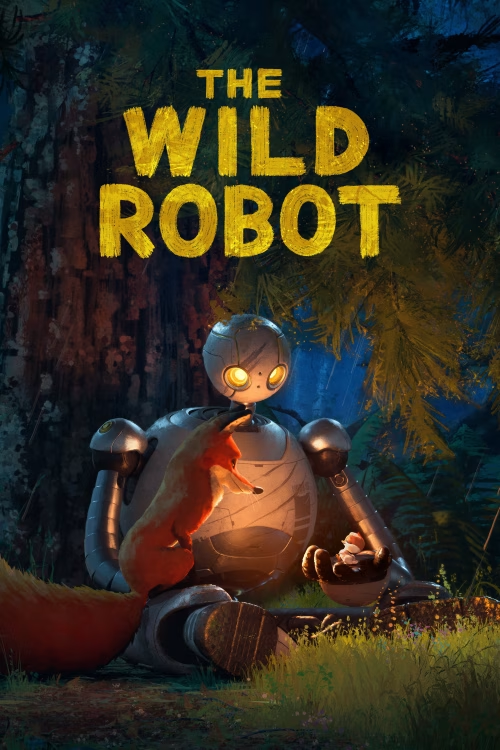
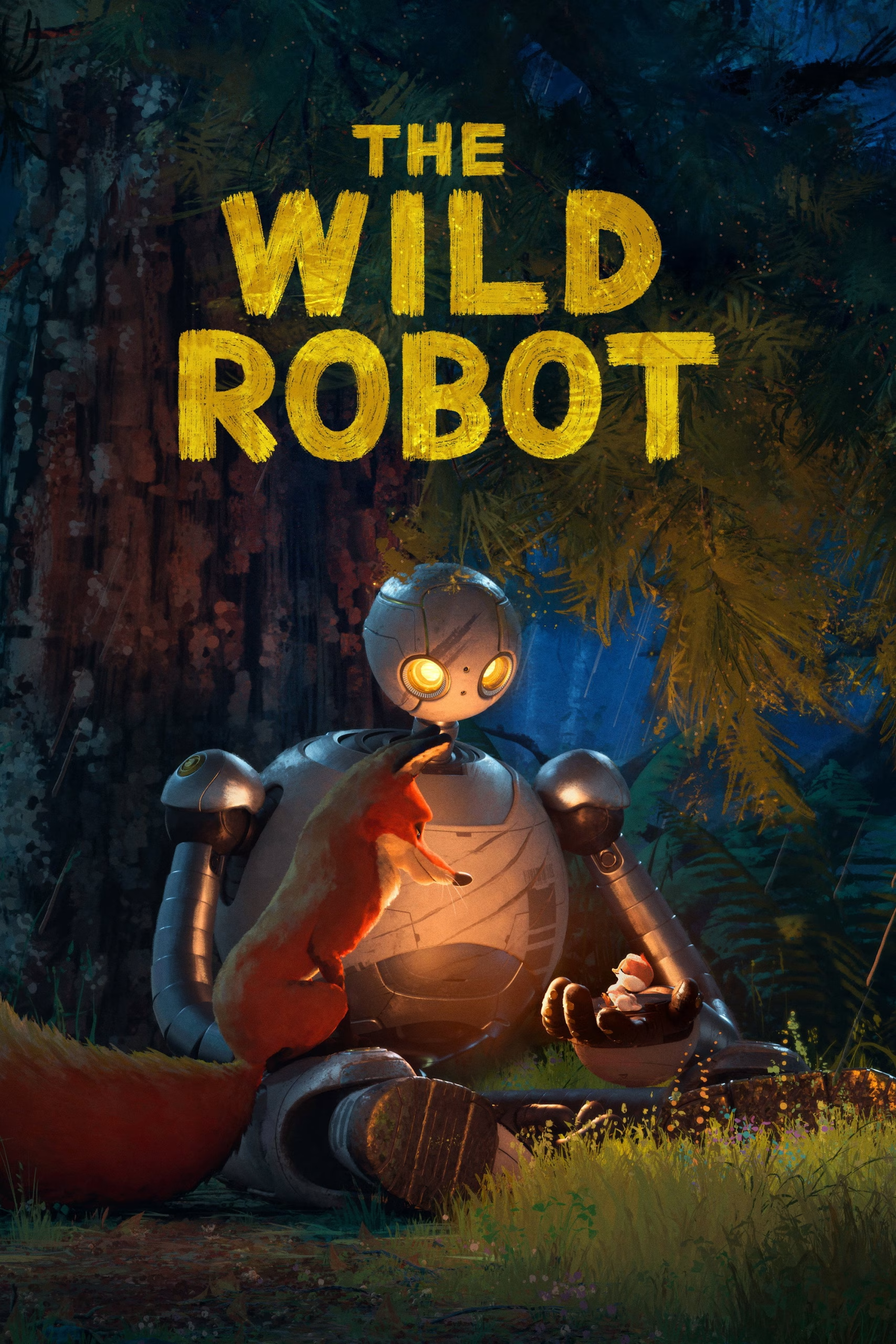
The Wild Robot begins from a contrast that is immediately useful for storytelling: a machine designed to follow instructions encounters a living environment that does not operate according to its assumptions. The journey of Roz raises questions about adaptation, care and the meaning of belonging. A character need not share the biology of those around her to become significant to their lives. The film’s premise is more interesting when viewed not as a contest between cold technology and warm nature but as a study of how relationships can alter what a being understands its purpose to be. This article explores that idea without explaining the major turns of the story.
A programmed purpose meets an unpredictable world
Machines are usually evaluated by how reliably they carry out a defined task. Natural environments are less convenient. Animals respond to threats, seasons and relationships, and their needs can change before a formal instruction has been supplied. That difference creates the story’s initial tension. Roz has to learn that completing a job and being useful to a community are not necessarily the same thing. Practical success may require observation, patience and a willingness to revise assumptions. The dramatic pleasure comes from watching an apparently precise system confront questions that cannot be solved by literal execution alone. Adaptation becomes the beginning of something that resembles judgment.
Care is demonstrated through repeated actions
Stories about family frequently rely on declarations of love, but the strongest emotional connections are often built through ordinary work. Feeding, protecting, staying nearby and returning after a disagreement can establish trust more convincingly than a speech. A robot learning to care makes those actions especially visible because they may initially appear outside its intended role. Watch how a task changes meaning when it is done for a particular individual rather than for the completion of a general objective. The film suggests that commitment is not only a feeling a character describes. It is also the pattern of choices through which someone becomes reliable to another living being.
The island is not simply a friendly classroom
The natural world contains cooperation as well as predation, scarcity and conflict. Treating every animal as a reassuring teacher would flatten the difficulty of Roz’s situation. The environment matters because surviving there requires understanding incompatible needs. What helps one creature may threaten another. A character attempting to protect someone must sometimes accept that the surrounding world will not become safe through goodwill alone. This provides genuine stakes for a family-oriented story. Nature is beautiful, but its beauty does not cancel its hazards. The contrast allows kindness to feel courageous rather than automatic, because offering help can have consequences.
Belonging can begin with being seen differently
A newcomer is often judged according to familiar categories. An unusual presence may be treated as dangerous or irrelevant before anyone learns what it can do. Roz’s journey creates space to ask how those perceptions change. A single act of assistance might not erase fear, but repeated reliability can establish a different relationship. The story benefits when trust develops gradually rather than appearing after one convenient display of heroism. Belonging is therefore a social process, not merely a private wish. It involves learning the habits of a community and allowing others to recognize you as more than the label they first applied.
Found families challenge the idea that origin determines destiny
Biological or manufactured origins explain how a character came into the world, but they do not settle every relationship the character might form. The idea of chosen family becomes moving when characters accept responsibility for one another despite differences in appearance, species or social role. That acceptance need not deny the importance of origins. It suggests that relationships are also shaped by what individuals do after meeting. Roz’s story invites viewers to look at the specific practices of care through which a bond forms. A family becomes credible when members learn how to support one another through uncertainty, not simply when the plot calls them a family.
Visual storytelling makes emotions legible
Animation can communicate inner change through movement, distance, framing and colour without requiring a character to explain every thought. A posture that initially looks mechanical may gradually take on a different emotional significance when paired with new choices. The changing relationship between a figure and its environment can also express belonging: a character framed as an intruder may eventually become part of a wider composition. Notice how the film balances the appearance of nature with the distinct physical qualities of the robot. The audience is encouraged to interpret gestures and repeated actions, discovering emotion through cinematic behaviour rather than relying entirely on dialogue.
Protection can require learning when to step aside
Caring for another being is not always the same as controlling its decisions. A guardian may want to remove every danger, but a dependent character eventually needs opportunities to act, fail and grow. That tension gives a family narrative an arc beyond immediate survival. Effective care requires judgment about when to intervene and when to allow independence. A machine designed to optimize outcomes might initially struggle with that uncertainty. The resulting lesson is not that rules are worthless, but that relationships create responsibilities that are difficult to reduce to a fixed set of instructions. The capacity to adjust can itself become a form of devotion.
What to notice while watching
Pay attention to how Roz’s understanding of usefulness changes, who challenges her assumptions and which actions create trust. Notice the difference between a task performed because it is required and an action chosen because somebody else matters. The The Wild Robot catalogue page provides a place to start exploring the title, and Peleza Stream Movies offers more animation and family storytelling to discover. Confirm authorized viewing options with the relevant local service, as a catalogue listing does not guarantee streaming availability.
Final perspective
The central appeal of The Wild Robot is the idea that purpose can be transformed by relationships. The story begins with instructions and survival, then asks what it means to protect another life even when the choice cannot be reduced to a simple command. That question makes a seemingly unusual protagonist emotionally recognizable and gives the animation its enduring significance.