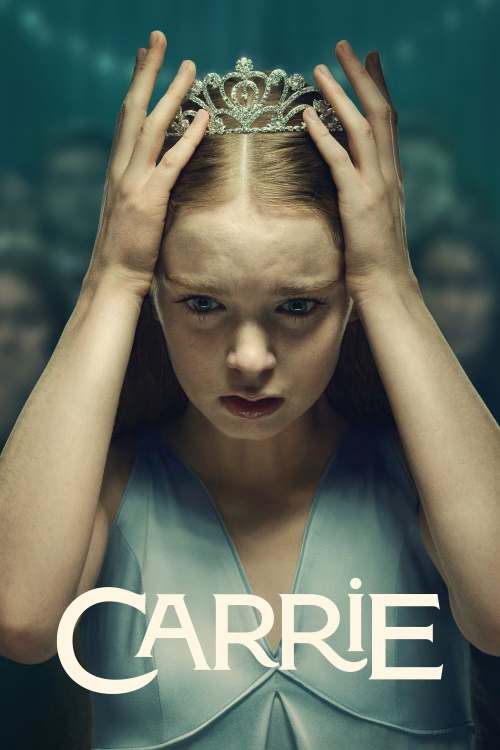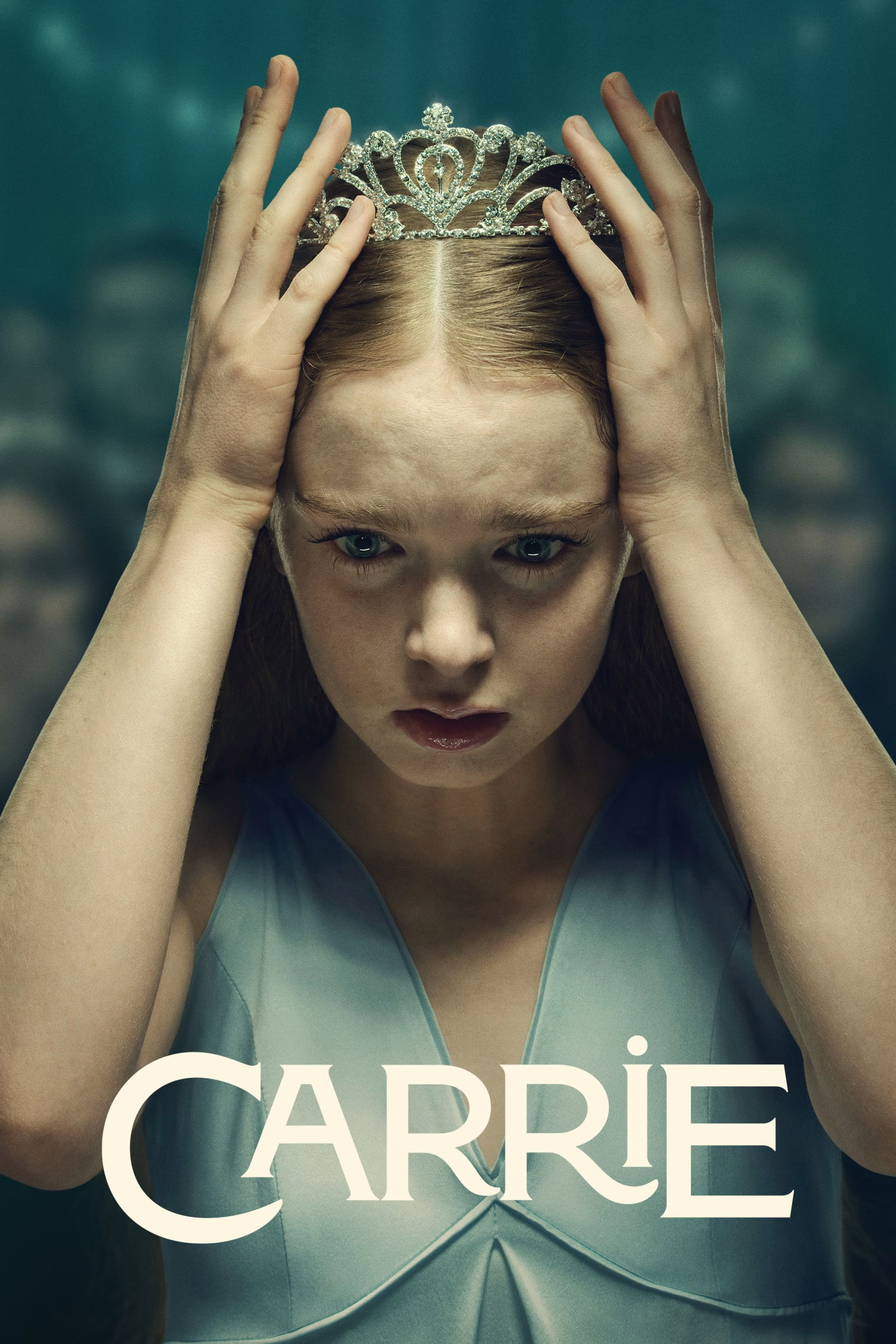
Carrie has always been a story about pressure building where adults either fail to notice it or choose not to intervene. A television format gives that idea something a feature film has less of: time. Instead of moving quickly from humiliation to catastrophe, a series can explore the systems around Carrie White and show how many small failures contribute to the larger tragedy.
Peleza Stream already has an existing Carrie series page. This feature looks at why long-form television can suit the material particularly well without predicting specific plot choices or production details that have not been established on the catalogue page.
More time can make the school feel like a real ecosystem
Bullying stories become more convincing when cruelty is not limited to one obvious antagonist. A school contains friendships, hierarchies, teachers, spectators and people who remain silent because speaking up would be uncomfortable. A series has room to show that network.
That matters for Carrie because isolation is not produced by one bad day. It develops through repetition. Showing ordinary interactions before the most famous moments can make the eventual breakdown feel less like a sudden genre turn and more like the result of a pattern.
Carrie’s home life deserves space of its own
The tension at home is different from the tension at school. One environment is public and social; the other is private and deeply personal. A feature film has to move between them efficiently, while a series can allow each space to develop its own rhythm.
That can make the contrast more powerful. School may represent embarrassment and exclusion, while home represents control and fear. Carrie has no obvious safe environment, which explains why even small opportunities for acceptance can carry enormous emotional weight.
Telekinesis works better when character comes first
The supernatural ability is central to the premise, but the story is not effective simply because Carrie can move objects. The power becomes frightening because it is connected to emotion, repression and a person who has never been taught how to understand herself safely.
A longer format can let the ability develop gradually. That creates room for curiosity, denial, experimentation and fear before it becomes a source of open conflict. The audience can watch Carrie’s relationship with the power change rather than treating it as a switch that suddenly turns on.
Supporting characters can become more complicated
One of the advantages of television is that secondary characters do not have to function only as obstacles or helpers. A classmate can be cruel in one episode, guilty in another and defensive later. A teacher can want to help while still misunderstanding what Carrie actually needs.
That complexity suits a story about social responsibility. If every character is either innocent or monstrous, the lesson becomes simple. If people make mixed choices, the audience has to consider how ordinary behaviour contributes to harm.
The adults are part of the story, not just background
Stories about teenagers often focus so heavily on peer conflict that the adults become invisible. Carrie is especially interesting when adults are examined too. Parents, teachers and authority figures shape the environment in which the younger characters behave.
A series can ask whether those adults recognise warning signs, whether they understand the social dynamics around them, and whether intervention comes too late because discomfort was easier to ignore than responsibility.
Faith and fear can be explored with more nuance
Carrie’s upbringing is inseparable from ideas about guilt, punishment and control. Long-form storytelling can distinguish between faith as a personal belief and the way belief can be used by an abusive person to justify domination.
That distinction matters because reducing the home environment to simple visual shock can miss the psychological effect. Carrie is not only frightened of another person; she has been taught a framework for understanding herself that can turn normal development into evidence of wrongdoing.
The famous moments become stronger when viewers know the routine
Iconic scenes are often remembered because of their immediate impact. A series has the opportunity to build the ordinary routine around them first. Viewers can understand what a normal school day looks like, who usually sits together and how Carrie moves through the space.
When that routine changes, the audience notices. Familiarity makes disruption more powerful because there is a clear before and after.
Long-form horror can use anticipation differently
A movie often has to maintain momentum toward a climax. Television can vary the pressure. One episode can focus on family tension, another on school dynamics and another on the developing supernatural element.
That variation can make the audience uneasy in a different way. The threat is not always immediate violence. Sometimes it is the knowledge that several problems are moving toward the same point while the characters do not yet understand how dangerous the combination is.
The challenge is avoiding unnecessary expansion
More screen time is only useful if it adds meaning. A series adaptation should not expand every minor detail simply because episodes need to be filled. The strongest use of the format would be to deepen relationships and consequences rather than inventing endless side plots.
Carrie’s story is powerful because it has direction. Long-form storytelling should make that direction richer, not blur it.
Why Carrie can fit television
The core story already contains several connected systems: family, school, belief, social status and supernatural power. Television can give each system room to breathe while still allowing them to collide.
That makes Carrie a natural candidate for a series format. The key will be preserving the emotional concentration of the story while using additional time to make the people and institutions around Carrie feel more complete.
Open the Carrie series page
Visit the Carrie series page on Peleza Stream for its catalogue entry. This feature focuses specifically on the storytelling possibilities created by the television format.