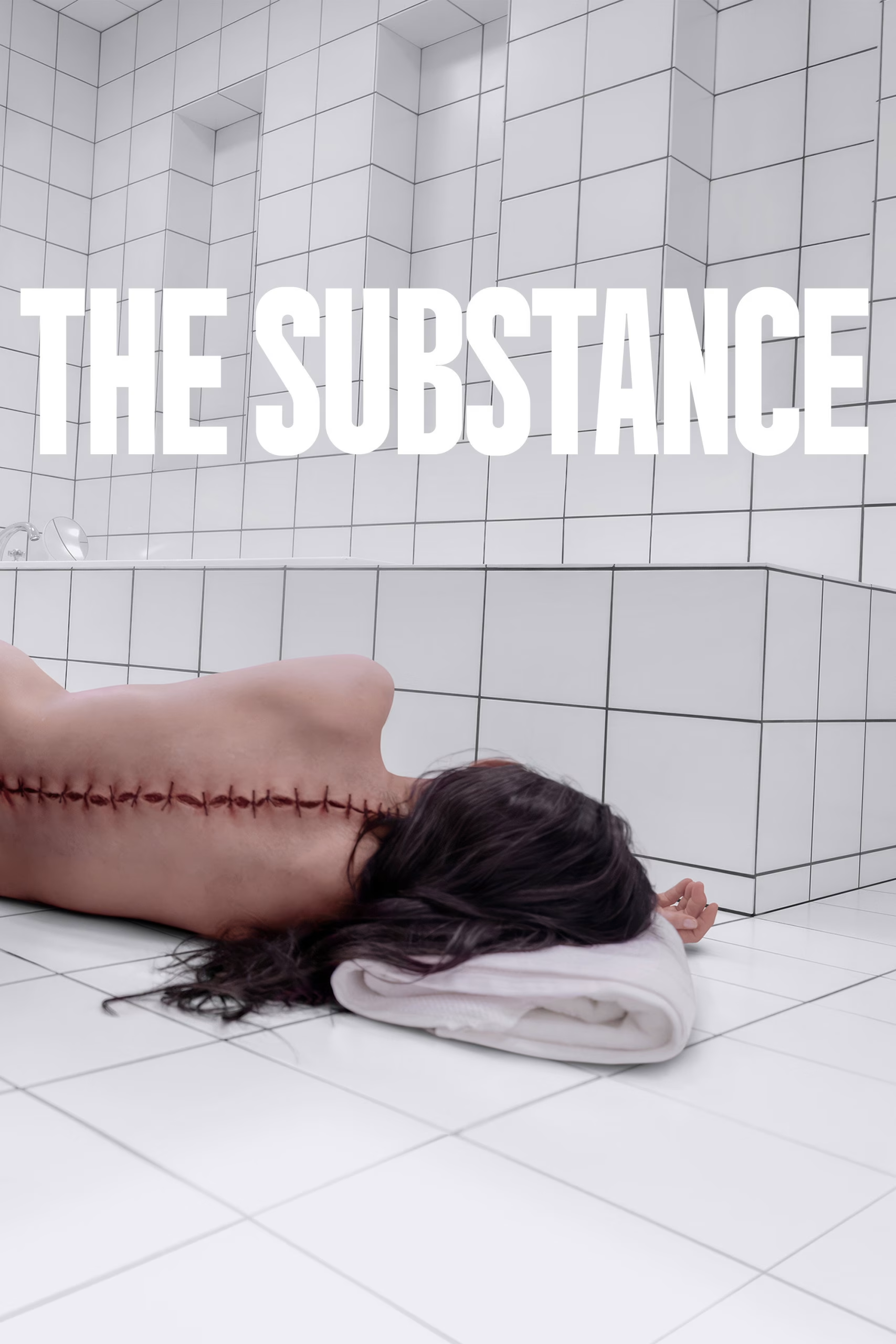
The Substance begins with a brutally simple temptation: a fading celebrity is offered a black-market substance that can create a younger version of herself. That premise immediately turns familiar anxieties about fame, aging and appearance into something physical. Instead of discussing beauty standards only through dialogue, the story gives them a body-horror form.
This feature stays spoiler-light and focuses on what makes the concept so effective, why the transformation premise is more unsettling than a normal makeover story, and how the film can be read as a conflict between identity and the demand to remain permanently desirable. The existing The Substance movie page on Peleza Stream contains the catalogue entry connected to this article.
The horror starts with a familiar pressure
The central fear is not invented by the film. Public figures are constantly evaluated according to appearance, age and relevance. Careers can be discussed as if people have expiry dates, particularly when image is part of the job. The story exaggerates that pressure, but the emotional logic is recognisable before anything extreme happens.
That familiarity matters because body horror is most effective when the audience understands why a character would take the first step. If the decision felt completely irrational, the later consequences would be easier to dismiss. Instead, the premise asks a more uncomfortable question: what if an impossible solution appeared at exactly the moment someone felt most replaceable?
A younger self is not the same thing as a better life
The fantasy behind the substance is easy to understand. A younger body appears to promise restored attention, opportunity and confidence. But the idea becomes disturbing because it separates the self into competing versions. Improvement is no longer about changing habits or circumstances. It becomes a literal argument over which version deserves to exist.
That creates a deeper form of conflict than a normal transformation story. If one version receives admiration while another carries the cost, success itself becomes unstable. The question stops being whether youth can be recovered and becomes whether identity can survive being divided according to what other people value.
Body horror makes social pressure impossible to ignore
Beauty standards are often discussed in abstract terms: expectations, trends, industries and cultural pressure. Body horror removes that distance. It turns pressure into flesh, discomfort and consequence. The viewer cannot keep the issue comfortably theoretical because the body itself becomes the place where the argument happens.
That is why the genre is especially suited to a story about aging. Aging is already physical, unavoidable and visible. Horror exaggerates the fear of losing control over that process, while the premise introduces the additional danger of trying to control it too aggressively.
The entertainment industry becomes part of the monster
A celebrity does not evaluate herself in isolation. She is evaluated through cameras, audiences, executives, publicity and comparison. That means the personal crisis at the centre of the film is also connected to an industry that constantly rewards novelty.
The most interesting interpretation is not that vanity alone creates the problem. The stronger point is that a system can teach people to measure their value using standards designed to keep changing. When attention becomes proof of worth, losing attention can feel like losing identity.
Why doubling is more disturbing than replacement
Many stories about transformation ask whether a character can become someone else. The Substance introduces a more psychologically difficult idea: what happens when the desired version exists alongside the person who wanted the change?
That makes comparison unavoidable. It is one thing to imagine a younger or more successful self. It is another to experience that version as a competitor. The fantasy therefore contains its own punishment. The better the new version appears to perform, the more the original self may feel diminished.
Control is the real illusion
The premise is built around a product that appears to offer control over aging. But stories like this become frightening when control has conditions. Every attempt to manage the body creates another rule, another dependency or another consequence.
This is a common strength of body horror: a character may believe they are using the transformation, only to discover that the transformation is reorganising their life. The body stops being a neutral tool and becomes an active source of uncertainty.
Why the film’s excess matters
A restrained drama could explore the same themes, but extreme imagery changes the emotional response. Exaggeration can make social expectations look as violent as they sometimes feel. The film can push an everyday insecurity until the audience sees the cruelty hidden inside ordinary language about staying young, staying marketable or remaining perfect.
That does not mean every viewer will respond the same way to the style. Body horror is deliberately confrontational. Its purpose is often to make an idea difficult to ignore, even when the imagery becomes uncomfortable.
What to watch for beyond the shock
Pay attention to the moments when approval changes behaviour. Notice how attention, opportunity and comparison affect the character’s sense of self. Those moments explain why the transformation keeps carrying emotional weight even when the film moves into more extreme territory.
It is also worth watching how language around improvement is used. Words such as better, younger, perfect or desirable sound positive, but the story keeps asking who benefits from those definitions and what must be sacrificed to satisfy them.
The lasting question
The most unsettling idea in The Substance is not simply that a dangerous product exists. It is that the product becomes attractive because the character already lives in a culture prepared to tell her that aging is failure. The horror therefore begins before the transformation.
That gives the film more to work with than shock alone. It becomes a story about what happens when self-worth is outsourced to an audience, and what remains when two versions of the same person are forced to compete for that approval.
Open The Substance on Peleza Stream
Visit the The Substance movie page for its catalogue details and artwork. This editorial feature adds thematic context without replacing the main title entry.