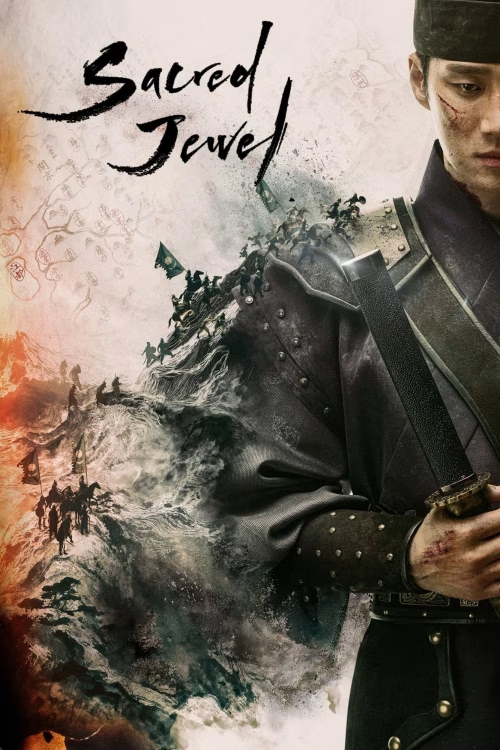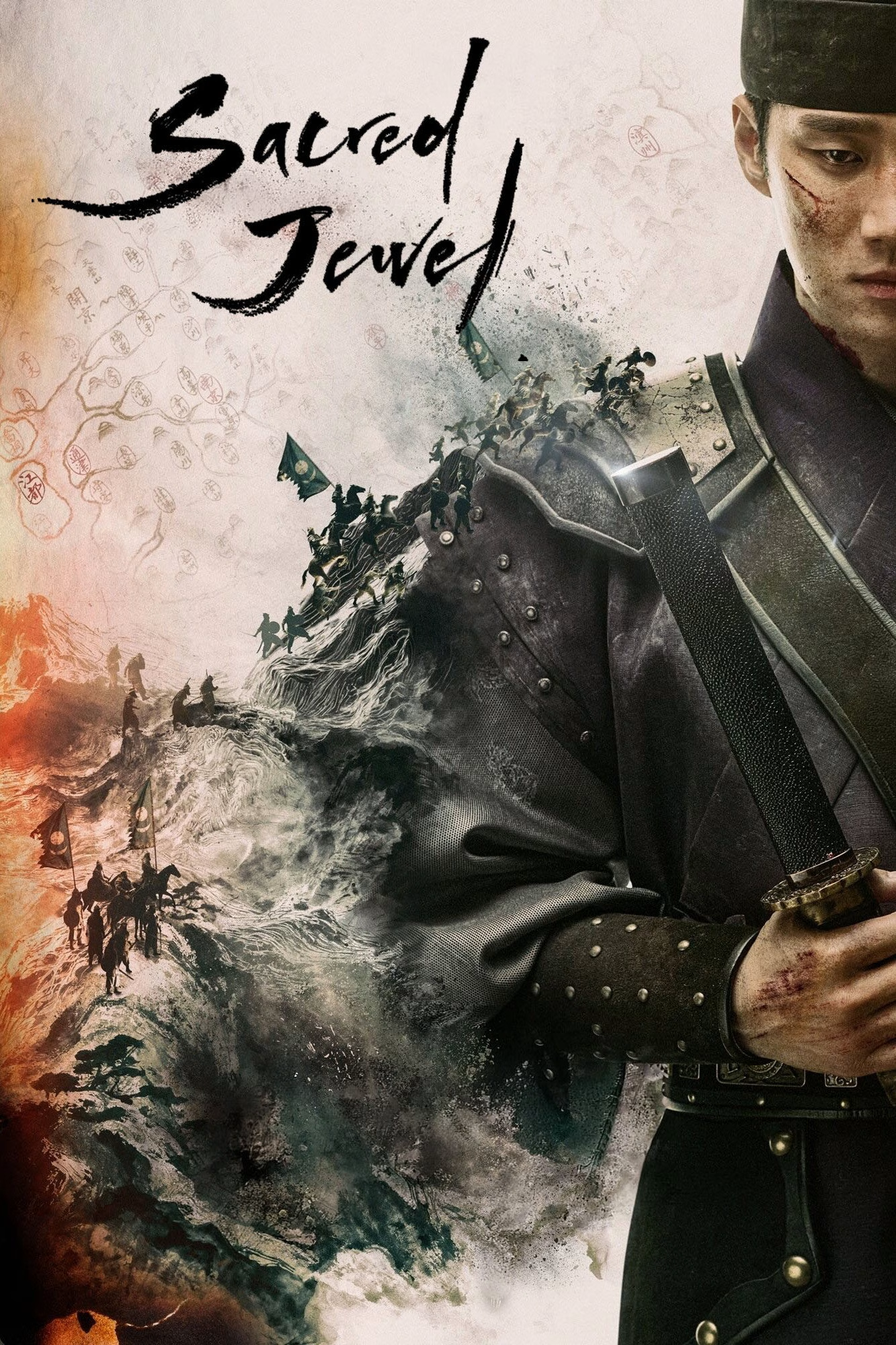
Sacred Jewel places its central mission during the final years of the Mongol invasions of Korea, immediately giving the story something more important than a simple treasure hunt. The characters are not moving through a stable kingdom. They are trying to recover and protect a sacred object while war has already changed the meaning of safety, loyalty and authority.
The Peleza Stream catalogue describes a group risking everything to protect the Avalokitesvara Jewel, with figures including Commander Baek-gyeol and Princess Wang-hee caught inside the mission. The Sacred Jewel series page contains the main title entry; this feature looks at why the historical setting gives that mission unusual dramatic weight.
A sacred object means more during political collapse
An object can be valuable because it is rare, but a sacred object carries another kind of importance. It can represent continuity when institutions are breaking apart. Protecting it becomes symbolic: saving something that tells people who they are when war is changing the world around them.
That makes the mission larger than possession. The question is not simply who owns the jewel. It is what the jewel means to the people willing to risk their lives for it.
The late Goryeo setting creates divided loyalties
Periods of invasion place characters under competing obligations. A commander may owe loyalty to a ruler, soldiers, family, local communities and personal principles at the same time. Those responsibilities can point in different directions.
That is fertile ground for drama because every decision has consequences beyond the immediate mission. Helping one group may expose another. Following an order may protect the state while violating a personal promise.
Princess Wang-hee can represent more than royal status
A royal character in wartime carries symbolic value whether she wants it or not. Her safety may matter politically, and her choices may be interpreted as statements about the legitimacy or future of the ruling order.
That means a princess cannot move through the story as an ordinary traveller. Alliances around her can be influenced by what she represents, creating tension between her personal decisions and the political meaning other people attach to them.
Commander Baek-gyeol faces a different kind of responsibility
A commander is judged through action. Strategy, discipline and protection of others are visible responsibilities, but war also creates situations where every available option carries a cost.
Pairing military responsibility with a sacred mission can therefore produce conflict between practical survival and symbolic duty. The most efficient choice may not always be the choice the characters believe they are morally permitted to make.
A journey story makes the landscape part of the danger
When characters must move through contested territory, geography becomes narrative. Mountains, roads, rivers and settlements are not neutral spaces. Every route can carry military risk, political uncertainty or the possibility of betrayal.
This gives the series a natural structure. Each stage of the journey can reveal a different effect of the wider conflict while still moving the main mission forward.
War changes the value of information
In a stable society, people can rely on institutions to verify what is happening. During invasion, information becomes fragmented. Rumours travel faster than confirmation, borders shift and yesterday’s safe route may be dangerous today.
A mission involving something valuable becomes especially vulnerable to leaks. The characters have to decide not only who can fight beside them, but who can be trusted with knowledge of where they are going and what they are carrying.
The jewel can test the difference between faith and possession
A sacred object invites a question: is protecting it an act of devotion, an act of national identity, or an attempt to control the authority attached to it? Different characters can answer differently without any of them necessarily believing they are motivated by greed.
That ambiguity can keep the object dramatically interesting. The jewel does not need supernatural powers to influence behaviour. Its meaning is enough to change what people are willing to do.
Historical drama works when personal stakes remain visible
Large historical events can overwhelm individual characters if the story becomes a sequence of dates and battles. The mission in Sacred Jewel provides a useful human scale. Viewers can understand the larger war through the immediate dangers faced by a smaller group.
That allows history to remain present without turning the characters into illustrations. The invasion affects where they travel, whom they trust and what they fear, but personal relationships can still drive the emotional story.
Why the mission has natural suspense
The characters have something that other people may want, they are moving through unstable territory, and they cannot simply abandon the mission without losing what the object represents. Those conditions create suspense without needing artificial complications.
Every new ally, checkpoint or change of route can produce uncertainty. The journey itself generates pressure because success requires movement while movement creates exposure.
What makes Sacred Jewel distinctive
The strongest element of the premise is the way sacred responsibility and wartime survival overlap. The mission can work simultaneously as adventure, political drama and a story about cultural memory.
That combination gives Sacred Jewel room to ask why people preserve symbols when practical survival is already difficult. The answer can reveal what a society believes is worth carrying into the future.
Why cultural memory raises the stakes
War threatens more than territory. It can also interrupt traditions, erase records and separate communities from objects that carry shared meaning. That gives the mission another layer: protecting the jewel can become a way of protecting continuity itself. Even characters who disagree about politics may still understand that some things matter because they connect the present to people who came before them.
That tension makes every choice more difficult. The group is not simply carrying something expensive through dangerous country. They are carrying an object whose symbolic value may survive long after the immediate military crisis has ended.
Find Sacred Jewel on Peleza Stream
Open the Sacred Jewel series page for the main catalogue information connected to this editorial feature.