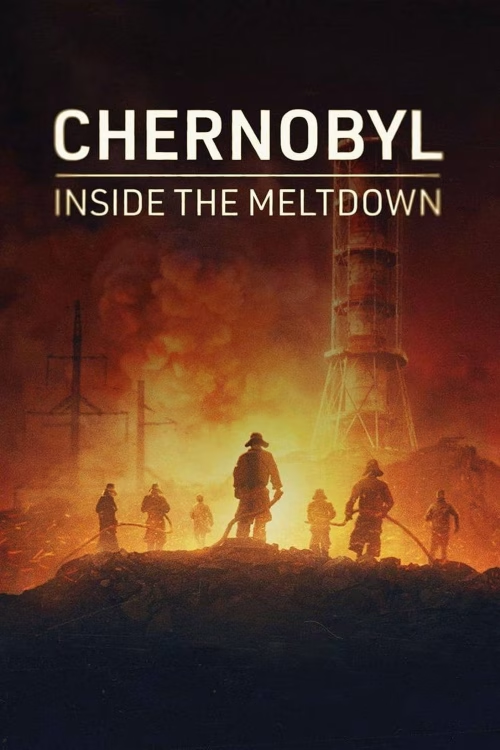
A documentary about a major disaster has a responsibility that goes beyond reconstructing a sequence of dramatic events. The people affected experienced fear, uncertainty and long-term consequences that cannot be understood through spectacular images alone. Chernobyl: Inside the Meltdown invites a deeper viewing approach: how do personal testimony, technical evidence and institutional decisions combine to create a useful historical account? A timeline can establish what happened first, but it cannot by itself explain why people acted as they did, which warnings were available or how the consequences shaped later lives. This analysis focuses on those documentary questions without claiming knowledge beyond the programme’s verified catalogue premise.
A chronology gives structure but not sufficient meaning
A disaster account often begins with dates, locations and the sequence of decisions that led to the event. Those details are necessary because viewers need to understand what was happening and when. Yet a chronology can become misleading when it treats every outcome as inevitable. People making decisions at the time rarely had the clear overview that audiences possess after the fact. A useful documentary distinguishes contemporary knowledge from retrospective explanation. It shows which facts were available to workers, officials and residents at different points. That distinction helps avoid judging every action as though everyone could see the entire chain of consequences unfolding in advance.
Survivor testimony restores the human scale
Official reports can describe machinery, procedures and numbers. Personal testimony communicates what those events meant to people who had to live through them. A witness may remember an unexpected instruction, the appearance of a workplace or the confusion of receiving incomplete information. Those details help viewers understand why a decision felt reasonable or frightening in the moment. Testimony is invaluable, but memory is not a perfect recording. An ethical documentary treats witnesses respectfully while explaining when accounts are corroborated, contradicted or uncertain. The value of a survivor’s perspective lies in experience, not in requiring one person to carry the burden of proving every historical detail.
Technical explanations need to respect uncertainty
A nuclear disaster involves systems and procedures that many viewers have never encountered. Good explanatory journalism can make those processes understandable without pretending they are simple. Diagrams, archival material and informed commentary can clarify how a technical failure became consequential. However, a reconstruction should distinguish verified mechanisms from simplifications made for general audiences. An expert who can explain the physics may not be qualified to describe every political or medical consequence, and those domains deserve their own evidence. Credibility grows when a programme identifies what is known, what remains debated and how the sources support its account.
Institutional culture can shape an emergency
A crisis tests more than equipment. Reporting structures, incentives, authority and the treatment of inconvenient information can influence how people respond. A documentary can explore whether workers felt able to raise concerns, whether communication reached those who needed it and how decisions were justified afterward. These are difficult questions because they involve responsibility without reducing an entire institution to one villain. Watch how the series describes procedures and whether it distinguishes individual error from broader organizational conditions. An accurate account should explain how authority and information moved through the system, rather than relying solely on dramatic scenes of confrontation.
Public understanding changes after the immediate danger
Disasters rarely end when the most visible emergency passes. Communities may face displacement, health worries, economic disruption and disagreements over how to remember what happened. Documentaries that include the aftermath give the event a fuller human context. It is important to avoid unverified medical claims or attributing every later illness to one cause without supporting evidence. At the same time, limiting the story to a single night can erase the experiences of people whose lives changed afterward. Good history considers both immediate consequences and the longer social process of rebuilding trust, livelihoods and a sense of security.
Archives and reenactments must be clearly distinguished
A historical programme can use actual recordings, photographs, contemporary documents and reconstructed sequences to help audiences understand an event. Each serves a different evidentiary role. Archival footage provides a record of something captured at a particular time, while a reenactment illustrates an interpretation of events. The latter may be useful when no camera was present, but it should not be mistaken for direct evidence. Look for clear labelling, source attribution and consistency between narration and visuals. Especially in a serious account of suffering, dramatic reconstruction should assist understanding rather than imply certainty about private conversations or gestures that nobody can verify.
Avoid the temptation to turn tragedy into spectacle
Disasters naturally contain images and moments that attract attention. But suspenseful editing and ominous music can overwhelm the testimony and technical evidence that make a documentary valuable. An ethical approach gives affected people identities beyond their proximity to danger, avoids unnecessary sensationalism and acknowledges uncertainty where it exists. Consider whether the programme lets a witness complete a thought or repeatedly cuts to dramatic footage designed to heighten fear. The distinction is not between emotional and unemotional documentary filmmaking. It is between emotion emerging from reliable human context and emotion being manufactured at the expense of context.
Questions worth carrying into the documentary
As you watch, keep three questions in mind: what evidence supports this scene, whose perspective is represented and what information was available to the people involved at that time? Those questions can deepen the experience without treating a programme as a formal academic paper. Visit the Chernobyl: Inside the Meltdown catalogue entry for the show’s basic information, and browse Peleza Stream Series for other documentary and historical programmes. Confirm viewing availability and the editorial sources of specific claims with their respective rights holders and reliable historical records.
Final perspective
The strongest disaster documentaries combine factual explanation with respect for the people behind the evidence. A chronology is necessary, but it becomes meaningful only when connected to decisions, lived experiences and enduring consequences. Approaching Chernobyl: Inside the Meltdown through these questions encourages careful attention to historical responsibility rather than passive consumption of another frightening recap.