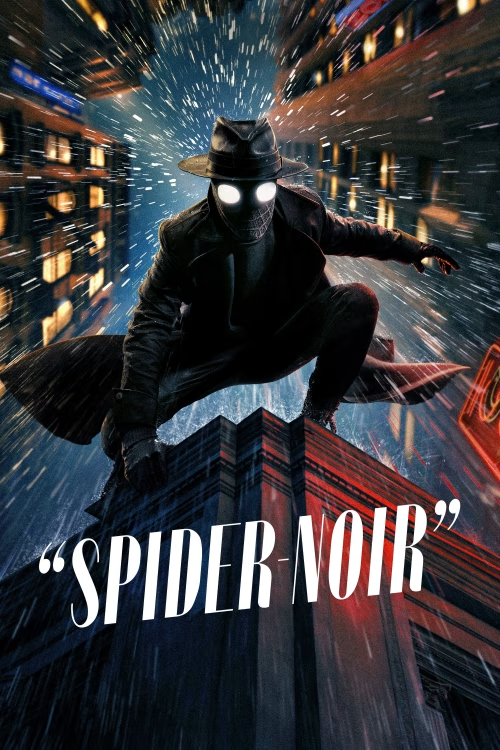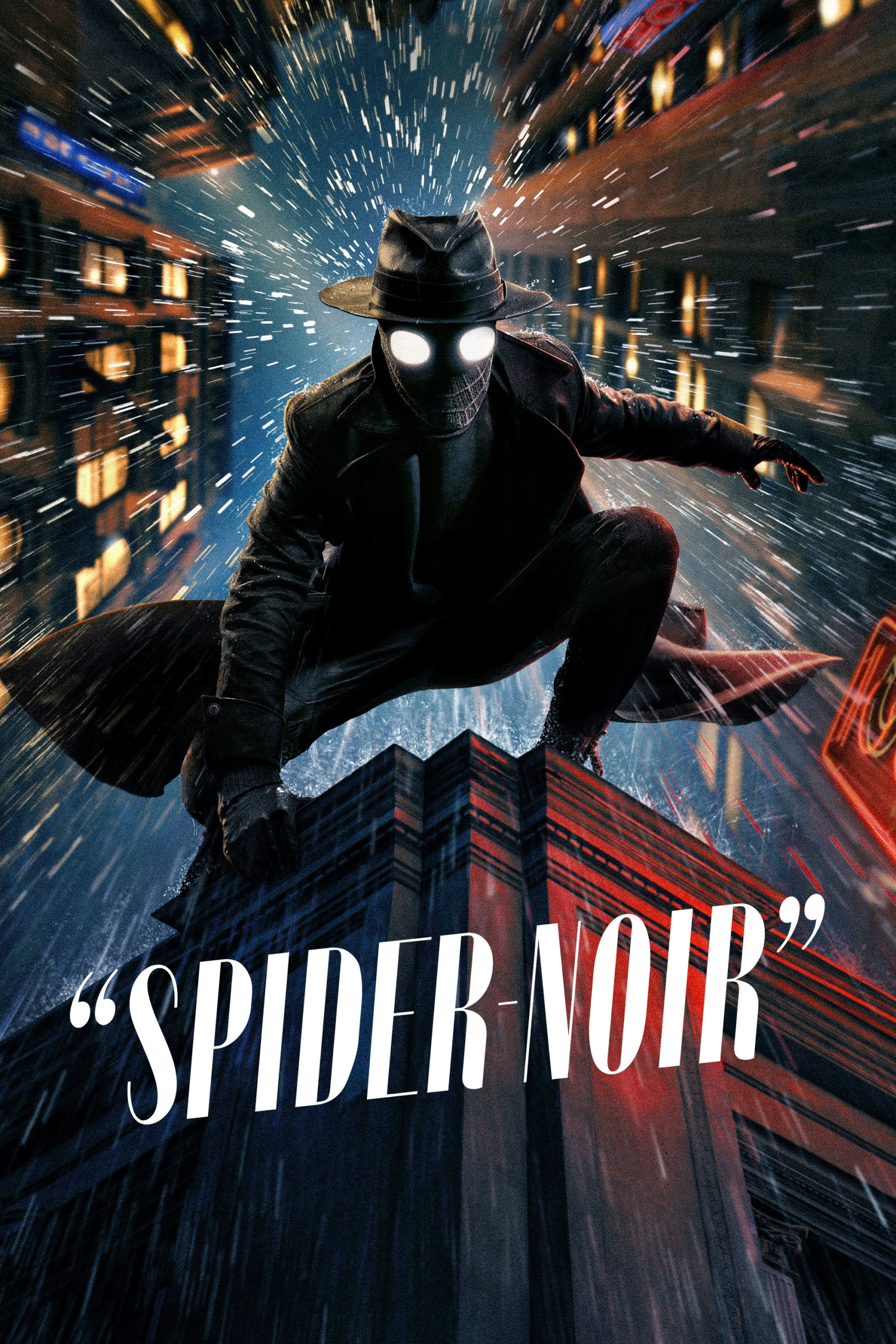
Spider-Noir gives a familiar superhero idea a very different engine. Nicolas Cage plays Ben Reilly as a worn-down private investigator in 1930s New York, a city where organised crime, political power and personal secrets matter as much as superhuman ability. Instead of building the story around a young hero learning that he has powers, the series begins with someone who already carries history, regret and a complicated relationship with the role he once played.
This spoiler-light guide focuses on the detective structure, period setting, Ben Reilly’s identity and the unusual presentation choices surrounding the series. For Peleza Stream’s stored synopsis, artwork and catalogue information, visit the Spider-Noir series page. You can also browse the broader Peleza Stream Series library.
Ben Reilly starts from experience rather than discovery
One of the strongest differences between Spider-Noir and a conventional superhero origin story is age. Ben does not need to discover that the world is dangerous or that power creates responsibility. He has already lived with both. That changes the dramatic question from “Will he become a hero?” to “What part of the hero is still left when someone has spent years living with the consequences?”
A private investigator is a useful profession for that version of the character because investigation requires attention, patience and a willingness to walk into other people’s secrets. Powers can help, but they do not automatically explain motive. Ben still has to decide who is lying, what evidence means and whether solving a case is worth reopening something in his own past.
The 1930s setting changes how information moves
Modern superhero stories can rely on phones, surveillance, instant news and digital records. A 1930s detective has a slower information environment. A witness may be the only person who knows something. A newspaper, police file, nightclub or street contact can become a major source of evidence. That makes physical places more important to the investigation.
The period also changes the balance of power. Wealth, political influence and organised crime can operate through personal networks that are harder to see from the outside. A hero who wants the truth may have to confront systems rather than one obvious villain, which is a natural fit for noir storytelling.
Noir is more than black-and-white photography
The visual style matters, but noir is fundamentally about uncertainty. The protagonist often enters a case believing he understands the rules and gradually discovers that every answer creates another moral complication. Allies may have competing motives, victims may hide information and the truth may not produce a clean victory.
That structure suits a Spider-character who is already burdened by history. Ben’s abilities can make him physically capable, but noir asks whether capability is enough when every available choice has a cost. The best version of the series will therefore use superpowers to intensify the detective problem rather than replace it.
Nicolas Cage is an important part of the tonal experiment
Cage can play intensity, sadness, eccentric humour and old-fashioned dramatic seriousness in the same performance. That range is useful for a series trying to combine superhero material with hard-boiled detective fiction. Ben needs to feel believable when he is tired in an office, dangerous in a confrontation and emotionally exposed when the past catches up with him.
The casting also helps separate this character from younger live-action Spider-heroes. Ben is not being positioned as another version of the same coming-of-age story. The series can let him be stranger, more damaged and more openly shaped by the genre around him.
Why the private-investigator structure can keep the powers grounded
Superpowers can sometimes make an investigation feel too easy if the hero can simply break into every room or overpower every suspect. A detective story stays interesting when information is the scarce resource. Ben may be able to survive a dangerous encounter, but that does not tell him who ordered it, who benefits or which witness he can trust.
This is where the 1930s setting and the superhero element can support one another. Physical danger remains credible because Ben is dealing with criminal networks and personal history, while his powers allow action scenes to break out without turning the whole show into a conventional police procedural.
The two presentation formats are more than a marketing gimmick
Amazon’s official coverage confirms that viewers can watch Spider-Noir in black-and-white or colour. That is unusually appropriate for this project. Black-and-white directly emphasises the classic noir influence, using contrast, shadow and texture to push the series toward older detective cinema. Colour can reveal production design and period detail differently while leaving the same performances and plot intact.
Neither version changes the underlying story, but the option invites viewers to think about how presentation changes mood. For official platform details and current availability, see Amazon’s official Spider-Noir guide.
What to watch for without spoilers
Notice how often Ben solves problems through observation before force. A good detective scene should tell you something about what he notices, what he assumes and where those assumptions fail. Also pay attention to rooms, offices, clubs and streets: in noir, locations often reveal class and power before a character says anything directly.
Watch the difference between Ben’s public confidence and private hesitation. An experienced hero can know exactly how to handle a physical threat while still being uncertain about guilt, loyalty or whether the past should remain buried.
Who is Spider-Noir likely to work for?
The series is a strong fit for viewers who like superhero stories but want a different rhythm from a conventional shared-universe adventure. Detective fiction fans may also find the period setting and case-driven structure more accessible than a story built entirely around franchise continuity.
Go in expecting a superhero filtered through crime fiction: an older protagonist, a city full of compromised institutions and a mystery that should matter even when no one is throwing a punch. The appeal is not simply seeing Spider-themed powers in the 1930s. It is seeing what those powers mean inside a genre where every answer can make the case more complicated.